

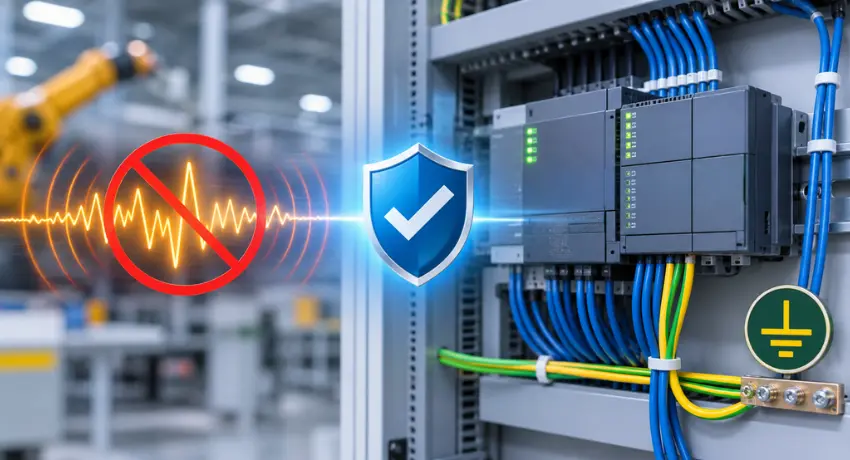
How to Reduce Electrical Noise in Industrial Automation Systems
Electrical noise is a common challenge in industrial automation systems. It can interfere with communication signals, affect sensor accuracy, cause PLC malfunctions and interrupt automated processes. In manufacturing facilities, equipment such as motors, variable frequency drives (VFDs), contactors, relays and transformers can generate electrical interference that affects nearby electronic devices. For example, a proximity sensor may send an incorrect signal or a PLC may receive unstable analog readings because of unwanted electrical disturbances. These problems can lead to production interruptions, additional maintenance costs and reduced equipment reliability. Understanding the causes of electrical noise and applying proper prevention methods can help industries maintain stable operations. This guide explains the common sources of electrical noise and practical ways to reduce its impact on industrial automation equipment.
What Is Electrical Noise?
Electrical noise refers to unwanted electrical signals or disturbances that affect the normal operation of electronic equipment. It can enter a system through power lines, signal cables, grounding connections or electromagnetic fields. Industrial automation devices use electrical signals to exchange information. For example, a temperature transmitter sends measurement data to a PLC through an analog signal. If electrical noise interferes with this signal, the controller may receive incorrect information. Electrical noise can affect analog measurements, digital inputs, communication networks and power supply performance. Proper shielding, grounding, cable separation and filtering help minimize these disturbances.
Common Causes of Electrical Noise in Industrial Automation Systems
Several factors can generate electrical interference in industrial environments.
1. Electromagnetic Interference (EMI)
EMI occurs when electromagnetic fields from motors, transformers, generators, and welding machines interfere with nearby electrical circuits. It can affect sensitive sensor signals and communication cables, particularly when proper shielding and cable separation are missing.
2. Radio Frequency Interference (RFI)
RFI is caused by unwanted high-frequency signals generated by wireless devices, radio transmitters, and electronic switching equipment. It can disturb sensitive instrumentation and industrial communication networks.
3. Ground Loops
Ground loops occur when connected devices have grounding points at different electrical potentials. Unwanted current may flow through signal reference paths, resulting in unstable readings, measurement offsets, and communication problems.
4. Improper Cable Routing
Installing power and signal cables together can increase electromagnetic coupling. For example, running sensor wiring alongside VFD motor cables may introduce interference into low-voltage signals.
5. Switching Devices and Power Equipment
VFDs, contactors, relays and solenoids can generate voltage transients during switching operations. These disturbances may affect nearby PLCs, sensors, and other sensitive electronic components.
How Electrical Noise Affects Industrial Automation Equipment
Electrical interference can create several problems in automated manufacturing processes, including:
- PLC malfunctions: False input signals, unexpected resets, and communication errors.
- Incorrect sensor readings: Unstable temperature, pressure, proximity, and level measurements.
- Communication interruptions: Data errors and connection problems in industrial networks.
- Unexpected equipment trips: Electrical disturbances may contribute to nuisance faults in motor drives.
- Component degradation: Repeated electrical transients can place additional stress on electronic equipment.
- Production downtime: Intermittent faults increase troubleshooting time and maintenance costs.
10 Effective Ways to Reduce Electrical Noise in Industrial Automation Systems
Applying proper electrical installation and maintenance practices can significantly reduce unwanted interference.
1. Use Proper Shielded Cables
Shielded cables help protect sensitive signals from external electromagnetic interference. Their conductive shielding layer reduces unwanted electrical coupling, while twisted-pair construction helps minimize induced magnetic interference. Use suitable shielded cables for analog sensors, encoders, instrumentation and communication connections. For VFD applications, select motor cables specifically designed for drive installations and follow the manufacturer’s shielding recommendations.
2. Ensure Proper Grounding and Earthing
Proper grounding provides a controlled path for fault currents and helps maintain suitable electrical reference potentials. Ensure that control panels, machine frames, PLCs and other electrical equipment have appropriate grounding and bonding connections. Keep bonding paths short and low impedance and regularly inspect connections for corrosion or looseness. Grounding arrangements should follow equipment specifications and applicable electrical standards.
3. Separate Power and Signal Cables
Keep high-power cables away from sensitive control and communication wiring to reduce electromagnetic interference.
Follow these practices:
- Use separate cable trays for power and signal wiring.
- Keep VFD motor cables away from analog sensor connections.
- Maintain suitable separation distances.
- Cross power and signal cables at approximately 90 degrees where necessary.
Proper cable separation is especially important in industrial control panels.
4. Install EMI and RFI Filters
EMI and RFI filters reduce unwanted electrical disturbances travelling through power and signal connections. They are commonly used with VFDs, industrial power supplies and sensitive electronic equipment. Select filters according to the equipment specifications and install them with proper grounding and short connections for effective performance.
5. Use Surge Protection Devices
Voltage surges caused by lightning, switching operations, and power supply disturbances can damage sensitive automation equipment. Surge protection devices (SPDs) help limit transient overvoltages and protect PLCs, sensors, power supplies and communication interfaces. Install suitable protection at incoming power connections and vulnerable field wiring according to the system design.
6. Maintain Proper Cable Routing
Organized cable routing reduces interference and makes maintenance easier. Keep cable runs short, avoid unnecessary loops, use suitable cable ducts, and maintain separation between power, control and instrumentation wiring. Proper cable support and protection also prevent insulation damage and installation-related problems.
7. Use Isolated Signal Interfaces
Signal isolators and isolated I/O modules help prevent unwanted electrical currents from travelling between connected circuits. They are useful for long-distance signal transmission, equipment with different grounding references, and applications where ground loops may affect analog measurements. Depending on the application, optocouplers and isolated signal converters can provide additional protection.
8. Install Ferrite Beads and Cores
Ferrite cores help suppress certain high-frequency disturbances travelling through electrical cables. They can be installed on sensor leads, communication cables, and power connections near the equipment. However, ferrite components should be selected according to the noise frequency and should complement proper shielding and grounding practices.
9. Choose Quality Industrial Power Supplies
Industrial automation equipment requires stable DC power for reliable operation. Select industrial power supplies with suitable voltage regulation, low output ripple, overload protection, and adequate current capacity. For example, a properly selected 24V DC power supply can provide stable power to PLCs, sensors, relays, and other control components. Always consider the total connected load and allow sufficient capacity for startup requirements and future expansion.
10. Perform Regular Inspection and Maintenance
Regular maintenance helps identify electrical interference problems before they affect production. Inspect grounding connections, cable insulation, shield terminations, filters, and electrical terminals. Also monitor power supply performance and investigate recurring PLC or VFD faults. Preventive maintenance improves equipment reliability and reduces unexpected downtime.
Must Read: What Is a Safety Relay? Working Principle, Types and Applications
Best Practices for Electrical Noise Prevention in Control Panels
Control panel design plays an important role in reducing electrical interference. Follow these practices when designing or upgrading industrial panels:
- Separate power equipment and sensitive control components.
- Use different wiring ducts for power, control, and instrumentation cables.
- Mount components on suitable bonded metal backplates.
- Use appropriate shield clamps and cable entry arrangements.
- Install suppression devices across suitable inductive loads.
- Maintain adequate ventilation to prevent excessive heat.
- Follow manufacturer recommendations for grounding and EMC protection.
These practices help maintain organized wiring and improve long-term panel reliability.
Role of PLCs, Sensors, VFDs and Relays in Electrical Noise Management
Different automation components require different noise protection methods.
- PLCs: Use suitable filtered or isolated I/O modules, proper grounding and recommended installation practices to minimize interference with input signals and communication circuits.
- Industrial Sensors: Proximity, photoelectric and analog sensors require suitable cable shielding and separation from high-power wiring to maintain accurate measurements.
- VFDs: Use shielded motor cables, appropriate EMC filters, output reactors where required, and proper motor grounding to reduce switching-related interference.
- Relays and Contactors: Install suitable suppression devices, such as flyback diodes for appropriate DC coils and RC snubbers or varistors for suitable AC applications, to reduce switching transients.
Common Electrical Noise Reduction Mistakes to Avoid
Avoid these common mistakes when installing or maintaining automation equipment:
- Running signal and motor cables together.
- Using unsuitable cables for sensitive signals.
- Ignoring grounding and bonding requirements.
- Applying incorrect cable shield termination methods.
- Installing filters without proper connections.
- Ignoring voltage spikes from relay and contactor coils.
- Depending only on software filtering to solve electrical interference.
- Neglecting regular inspection and maintenance.
Benefits of Reducing Electrical Noise in Industrial Automation
Effective noise management offers several benefits:
- Improved reliability: Reduces interference-related equipment faults.
- Accurate measurements: Helps maintain reliable sensor and instrumentation readings.
- Stable communication: Improves signal quality between connected devices.
- Reduced downtime: Minimizes troubleshooting and unexpected interruptions.
- Better equipment protection: Helps protect sensitive electronic components.
- Lower maintenance costs: Reduces recurring electrical problems and unnecessary repairs.
Conclusion
Electrical noise can affect the performance of industrial automation systems by disturbing signals, creating communication errors and causing unexpected equipment behaviour. However, proper cable shielding, grounding, cable separation, filtering, surge protection and regular maintenance can significantly reduce its impact. Selecting suitable PLCs, sensors, VFDs, relays and power supplies is equally important for building reliable automation systems. Ladderlogixindia, a trusted industrial automation products supplier, helps businesses find suitable automation components for their electrical, control panel and industrial automation requirements.
Read More: How to Select the Right Terminal Blocks for Control Panel Wiring
Frequently Asked Questions
1. What causes electrical noise in industrial automation systems?
Common causes include electromagnetic interference from motors and transformers, radio frequency interference, ground loops, improper cable routing and switching devices such as VFDs and contactors.
2. How can electrical noise affect PLC performance?
Electrical noise can cause false input signals, inaccurate analog readings, communication errors, and unexpected controller behaviour. Severe interference may contribute to system interruptions.
3. Why are shielded cables important in industrial automation?
Shielded cables help protect sensitive signals from external electromagnetic interference. They are commonly used for analog sensors, encoders and industrial communication connections.
4. How can VFD-related electrical noise be reduced?
Use suitable shielded motor cables, maintain proper grounding, install appropriate EMC filters or output reactors, and separate motor cables from sensitive signal wiring.
5. What is the best grounding method to prevent electrical interference?
Proper protective earthing, low-impedance bonding and suitable shield termination help reduce electrical interference. The correct grounding arrangement depends on the equipment and installation requirements.
How to Choose the Right 24V DC Power Supply - Ladder Logix India
November 18, 2026[…] Read More: How to Reduce Electrical Noise in Industrial Automation Systems […]