

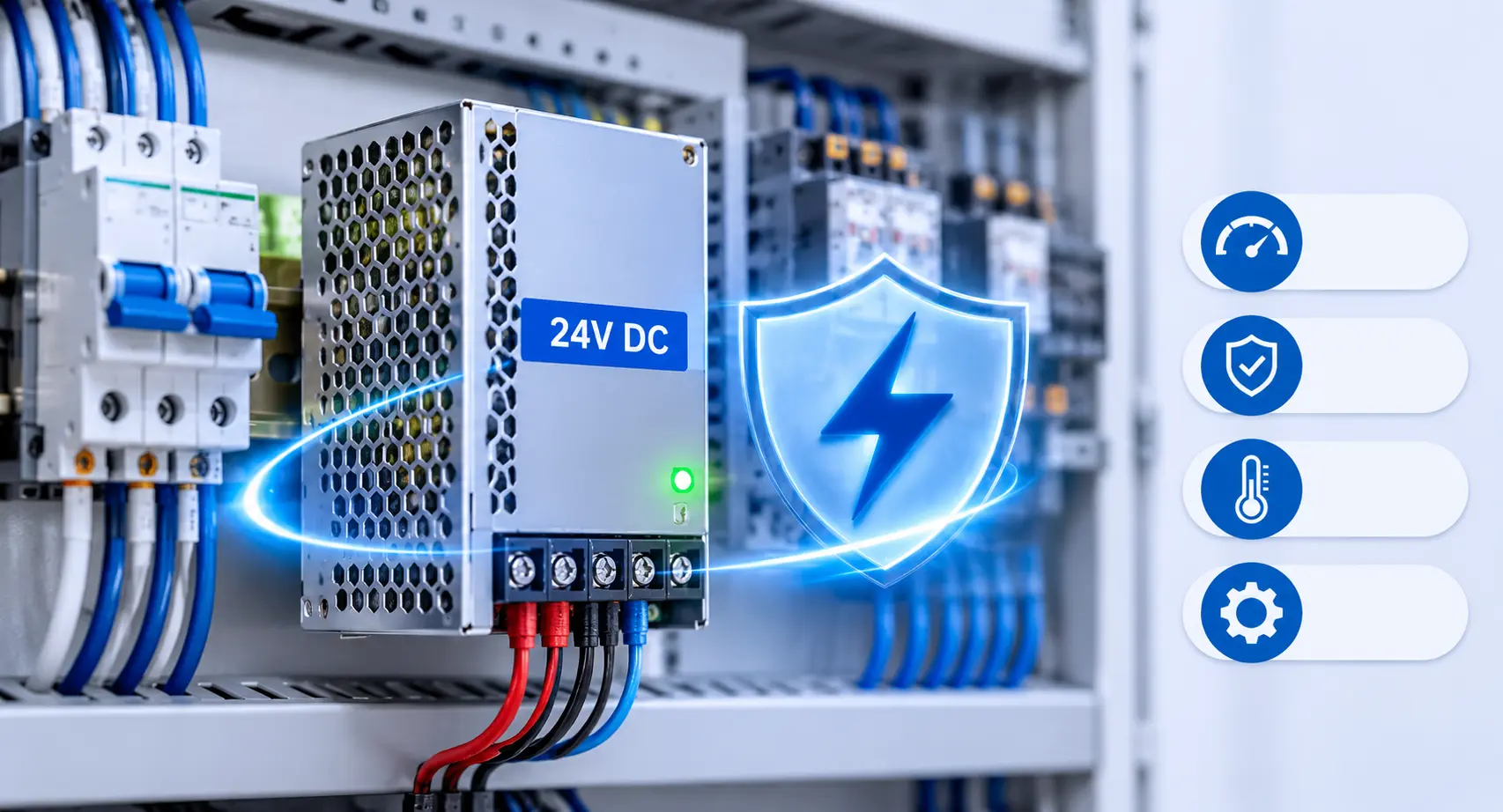
How to Choose the Right 24V DC Power Supply for Industrial Control Panels
Industrial control panels play an important role in managing machines, electrical equipment, and automated processes. They contain several components, including programmable logic controllers (PLCs), sensors, relays, human-machine interfaces (HMIs) and communication devices. Most of these components require a stable power source to operate correctly. A 24V DC power supply provides the required electrical power to many of these devices.
A 24V DC power supply converts incoming AC voltage into a regulated 24V DC output. It helps maintain consistent power delivery, supports reliable equipment operation and reduces problems caused by unstable voltage. However, choosing the right power supply involves more than checking its voltage rating. Current requirements, load capacity, efficiency, protection features, operating temperature and installation space also need consideration. In this guide, we will explain how to choose the right 24V DC power supply for industrial control panels and discuss the important factors that influence its performance and reliability.
What Is a 24V DC Power Supply?
A 24V DC power supply is an electrical device that converts incoming AC or DC voltage into a stable 24-volt direct current output, depending on its design. In industrial applications, AC-to-DC power supplies are commonly used to provide the voltage required by automation and control equipment. Many industrial devices are designed to operate on 24V DC because it offers a practical balance between electrical safety considerations and compatibility with control circuits. For example, PLCs use DC power for their control electronics, while proximity sensors, photoelectric sensors, interface relays and other field devices may also require 24V DC. Most industrial power supplies are available in DIN-rail-mounted designs, making installation inside electrical control panels easier. They also come in different current and power ratings to support various automation requirements.
Why Is a 24V DC Power Supply Important in Industrial Control Panels?
A reliable power supply is essential for maintaining the performance of industrial control equipment. Even when all other components are correctly selected, an unsuitable power supply can cause operational problems.
Here are some important reasons why 24V DC power supplies are widely used:
- Stable power delivery: Provides consistent voltage to connected automation devices.
- Reliable equipment operation: Supports the proper functioning of PLCs, sensors, relays, and control circuits.
- Reduced downtime: Appropriate power capacity helps prevent interruptions caused by overload conditions.
- Equipment compatibility: Supports many commonly used industrial automation components.
- Organized wiring: Allows multiple control devices to receive power from a properly designed DC distribution system.
For example, an automated packaging machine may use one 24V DC power supply for its PLC, sensors and interface relays. If the supply cannot handle their combined electrical requirements, voltage drops or unexpected shutdowns may occur.
Key Factors to Consider When Selecting a 24V DC Power Supply
Selecting the right power supply requires understanding the electrical and environmental requirements of your control panel. Consider the following factors before making a decision.
1. Input Voltage Requirements
The first step is checking the available input voltage at the installation location. Industrial facilities may use different AC voltage levels depending on their electrical distribution systems.Many industrial power supplies support a wide AC input range, allowing them to operate under different supply conditions. However, always verify the manufacturer’s input voltage specifications. Selecting a compatible input range helps prevent electrical problems and supports reliable operation.
2. Output Voltage and Current Rating
Output voltage and current rating are two important specifications when choosing a 24V DC power supply. The output voltage should match the requirements of connected equipment, while the current rating determines how much current the power supply can deliver. For example, a 24V DC, 5A power supply can provide a maximum rated output current of 5 amperes under specified operating conditions. If connected devices demand more current than the power supply can provide, the system may experience voltage drops, overload protection activation or unexpected shutdowns. Always check the current consumption of every connected component before selecting a model.
4. Efficiency and Energy Consumption
Efficiency describes how effectively a power supply converts input energy into usable output power. A high-efficiency power supply produces less energy loss in the form of heat. This can help reduce electricity consumption and temperature buildup inside control panels. In manufacturing facilities where equipment operates continuously, selecting efficient power supplies can contribute to better energy management. Always check the manufacturer’s efficiency ratings and operating specifications.
5. Protection Features
Industrial environments can expose electrical equipment to overloads, short circuits and other electrical disturbances. Therefore, protection features are important when selecting a power supply.
Some common protection features include:
- Overload protection: Helps protect the unit when connected equipment demands excessive current.
- Short-circuit protection: Helps limit damage when a short circuit occurs in output wiring.
- Overvoltage protection: Helps protect connected equipment from excessive output voltage.
- Overtemperature protection: Helps prevent overheating during demanding operating conditions.
The available protection features vary between models, so review the product datasheet before purchasing.
6. Operating Temperature and Environmental Conditions
Industrial control panels may operate in environments with varying temperatures, dust, and humidity. High temperatures can affect power supply performance and reduce its available output capacity. Therefore, check the specified operating temperature range and derating characteristics. For panels installed in demanding environments, proper ventilation, suitable enclosure protection, and adequate spacing between components are important.
7. Mounting and Installation Requirements
Installation requirements should also influence your selection, especially when control panel space is limited. DIN-rail-mounted power supplies are commonly preferred because they are convenient to install and help maintain organized panel layouts.
Before purchasing, consider:
- Available DIN-rail space
- Power supply dimensions
- Terminal accessibility
- Wiring arrangements
- Ventilation clearance
- Recommended mounting orientation
Proper installation also makes inspection and maintenance easier.
Types of 24V DC Power Supplies Used in Industrial Automation
Different industrial applications require different power supply designs. Understanding the available types can help you select a suitable option.
1. Switched-Mode Power Supplies
SMPS units are widely used in industrial control panels. They use high-frequency switching technology to convert electrical power efficiently. Their compact design and availability in different power ratings make them suitable for PLCs, sensors, relays and HMIs.
2. Regulated Power Supplies
Regulated power supplies maintain a controlled output voltage within their specified operating limits, even when input voltage or load conditions change. They are useful for electronic devices that require stable DC power.
3. Redundant Power Supply Systems
Redundant arrangements use multiple power supplies to improve power availability. If one unit fails, another can continue supplying the load when the system is correctly designed. These arrangements are useful in critical industrial applications.
4. Uninterruptible DC Power Supply Systems
DC UPS systems use batteries to maintain power during interruptions in the main electrical supply. They can support critical control equipment for a specified period, depending on battery capacity and connected load.
Common Applications of 24V DC Power Supplies
24V DC power supplies are used in different industrial sectors because many automation and control devices operate at this voltage.
Common applications include:
- PLC control systems: Supplying power to PLC control circuits and compatible I/O modules.
- Industrial sensors: Operating proximity, photoelectric, and other detection devices.
- Relay circuits: Supplying compatible DC relay and control circuits.
- HMI systems: Providing power to compatible operator interfaces.
- Packaging machinery: Supporting sensors and control components used in automated packaging.
- Conveyor systems: Powering compatible control devices used in material handling.
- Communication equipment: Supporting compatible industrial switches and communication modules.
The correct power supply depends on the electrical requirements of each device and the overall control panel design.
Conclusion
Choosing the right 24V DC power supply for industrial control panels is essential for maintaining reliable equipment operation and consistent system performance. Before selecting a model, consider input voltage, output current, power capacity, efficiency, protection features, operating temperature, and mounting requirements. Calculating the combined load of connected devices and allowing sufficient additional capacity can help prevent overload conditions and support future expansion. Ladderlogixindia, a trusted industrial automation products supplier, supports businesses in exploring suitable automation components and power supply solutions to meet their industrial control panel requirements.
Read More: How to Reduce Electrical Noise in Industrial Automation Systems
Frequently Asked Questions
1. What is a 24V DC power supply used for in industrial control panels?
It converts incoming electrical power into a stable 24V DC output used to operate PLCs, sensors, relays, HMIs and other compatible automation devices.
2. How do I calculate the required 24V DC power supply capacity?
Calculate the total current consumption of all connected devices and multiply it by 24V to determine the required wattage. Include an appropriate design margin for load variations and future expansion.
3. What is the difference between regulated and unregulated power supplies?
A regulated power supply maintains a controlled output voltage within its specified operating range. An unregulated power supply allows its output voltage to vary with changes in input voltage and load.
4. Why is power supply efficiency important in industrial automation?
Higher efficiency reduces energy losses and heat generation. This supports better energy management and helps control temperature inside electrical panels.
5. How long does an industrial 24V DC power supply typically last?
Its service life depends on product quality, operating temperature, electrical load, installation conditions and maintenance. Proper ventilation and following manufacturer recommendations can help extend its operating life.