

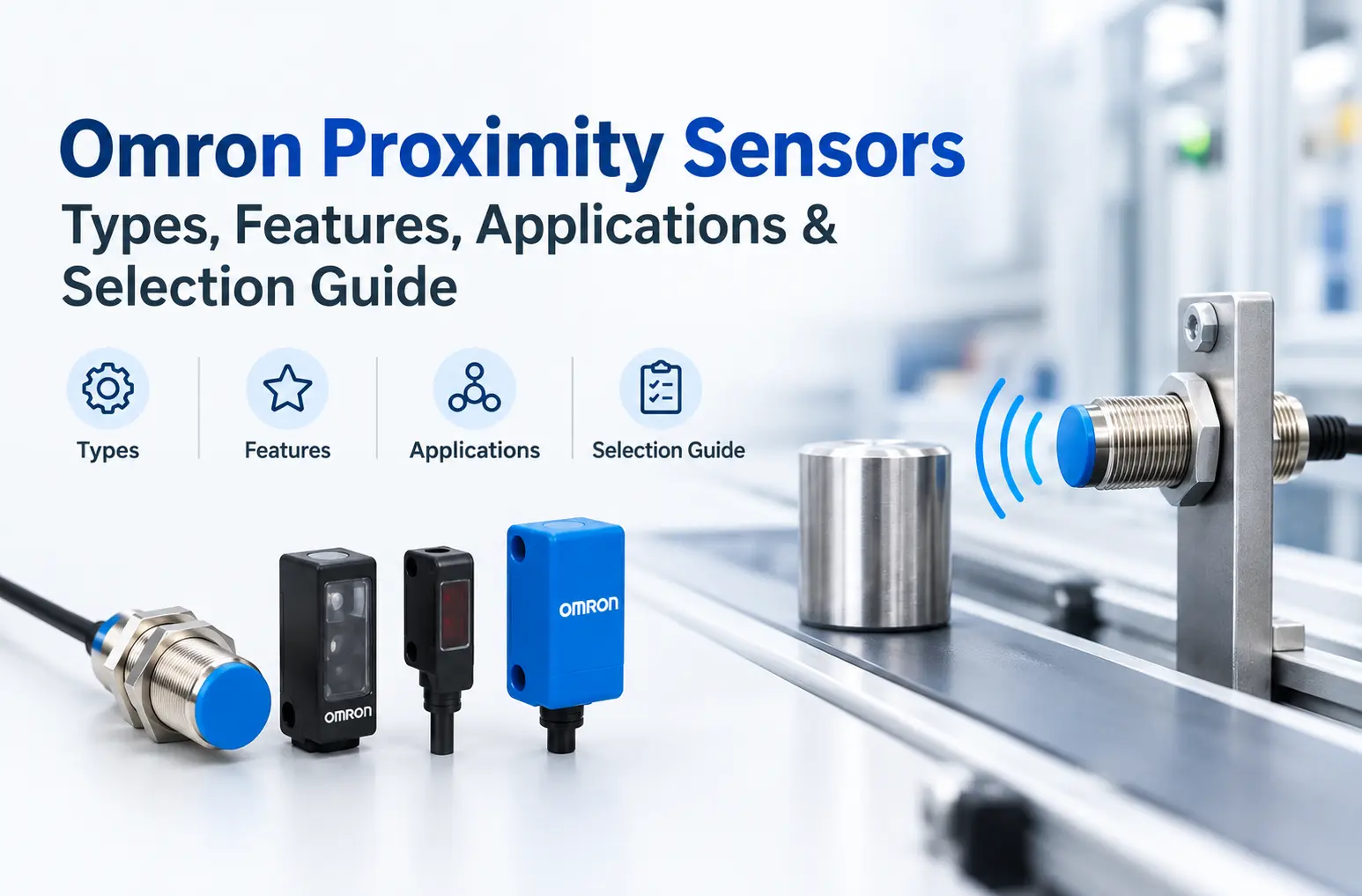
Omron Proximity Sensors – Types, Features, Applications & Selection Guide
In modern industrial automation, accurate and reliable object detection is essential for keeping machines and production processes running efficiently. Omron proximity sensors provide non-contact detection of objects, helping automation systems identify the presence, position, or movement of components without physical contact. They are widely used in manufacturing, packaging, automotive, material handling, and robotics applications. In this guide, we’ll explore the different types of Omron proximity sensors, how they work, their key features and applications, and the important factors to consider when choosing the right sensor for your automation needs.
What Are Proximity Sensors?
A proximity sensor is a device that detects the presence or absence of an object without any physical contact. Unlike mechanical limit switches that rely on direct touch, proximity sensors use electromagnetic fields, light, or capacitance to sense nearby objects. This non-contact detection method makes them ideal for high-speed automation lines, harsh environments, and applications where wear and tear from physical contact would shorten the life of a sensing device. Proximity sensors are typically compact, durable, and designed to operate reliably in conditions involving dust, moisture, vibration, and temperature extremes, conditions common on factory floors.
How Do Omron Proximity Sensors Work?
Omron proximity sensors generally work by generating a sensing field around the sensor’s active face. When a target object enters this field, it causes a measurable change, whether in an electromagnetic field, a capacitance value, or a magnetic flux, which the sensor’s internal circuitry detects and converts into an output signal. This signal is then sent to a PLC (Programmable Logic Controller) or control system, triggering the appropriate automated response, such as stopping a conveyor, counting parts, or signaling a robotic arm to move.
The core working principle varies slightly depending on the sensor type, but the underlying goal remains the same: detect an object’s presence quickly, accurately, and repeatably, without physical contact.
Types of Omron Proximity Sensors
Omron proximity sensors are available in different types, each designed for specific materials, detection requirements, and industrial applications.
1. Inductive Proximity Sensors
Inductive proximity sensors are primarily used to detect metal objects without physical contact. They generate an electromagnetic field at the sensing face, and when a metal target enters this field, the resulting change is detected by the sensor and converted into an output signal. These sensors are commonly used in machine tools, automotive manufacturing, metalworking, and assembly applications, where reliable detection of metal components is required.
2. Capacitive Proximity Sensors
Capacitive proximity sensors can detect both metallic and non-metallic materials, making them more versatile than inductive sensors for certain applications. They detect changes in capacitance when a target enters the sensor’s electric field. Depending on the application, they can detect materials such as plastic, glass, wood, powders, and liquids. Common uses include packaging equipment, liquid-level detection, material handling, and food and beverage processing.
3. Magnetic Proximity Sensors
Magnetic proximity sensors detect the presence of a magnetic field, typically produced by a magnet attached to or integrated with the target. They are particularly useful for detecting the position of moving components without direct contact. These sensors are commonly used in pneumatic cylinders, position-detection systems, and enclosed machine applications where reliable magnetic detection is required.
Understanding these sensor types can help you choose the most suitable solution for accurate and reliable object detection in your automation system.
Pro Tip: A reliable industrial automation products supplier can help ensure quality products, technical guidance, and timely support.
Key Features of Omron Proximity Sensors
Omron proximity sensors are engineered with several standout features that set them apart in industrial settings:
- High Sensing Accuracy: Precise detection ranges ensure consistent performance even in demanding applications.
- Durable Construction: Housings resistant to oil, dust, vibration, and extreme temperatures extend service life.
- Wide Sensing Range Options: Available in short, medium, and long sensing distances to suit different applications.
- IP-Rated Protection: Many models offer high ingress protection ratings, making them suitable for washdown and outdoor environments.
- Compact Form Factors: Space-saving designs allow integration into tight machine assemblies.
- Multiple Output Types: NPN, PNP, and analog output options provide flexibility for different control systems.
- Fast Response Time: Quick switching frequencies support high-speed automation processes.
Benefits of Using Proximity Sensors in Industrial Automation
Integrating proximity sensors into industrial automation systems delivers several tangible advantages:
- Improved Reliability: Non-contact sensing reduces mechanical wear, resulting in longer operational life and fewer breakdowns.
- Enhanced Safety: Sensors can detect hazardous conditions or object presence, helping prevent accidents on the production floor.
- Increased Productivity: Fast, accurate detection supports higher throughput and reduces downtime caused by sensing errors.
- Reduced Maintenance Costs: Durable designs mean fewer replacements and lower long-term maintenance expenses.
- Versatility: With multiple sensor types available, manufacturers can find a suitable solution for nearly any material or environment.
- Precision Control: Accurate positioning and object detection improve overall process quality and consistency.
Common Applications of Omron Proximity Sensors
Omron proximity sensors are deployed across a wide range of industries and use cases, including:
- Automotive Manufacturing: Detecting metal parts on assembly lines and verifying component positioning.
- Packaging Industry: Monitoring product presence, counting items, and detecting packaging material.
- Food and Beverage Processing: Sensing liquid levels and detecting non-metallic containers using capacitive sensors.
- Material Handling: Detecting objects on conveyor systems to control sorting and routing.
- Robotics: Providing feedback for robotic arm positioning and part detection.
- Pneumatic Systems: Using magnetic sensors to detect cylinder piston position for precise actuation control.
How to Choose the Right Proximity Sensor
Selecting the correct proximity sensor involves evaluating several factors specific to your application:
- Target Material: Determine whether the object being detected is metallic, non-metallic, or magnetic, as this dictates the sensor type needed.
- Sensing Distance: Consider the required detection range and choose a sensor with an appropriate sensing distance, keeping some margin for reliability.
- Environmental Conditions: Account for temperature, moisture, dust, and chemical exposure to select a sensor with adequate protection ratings.
- Output Type: Match the sensor’s output (NPN, PNP, analog, etc.) with your control system’s requirements.
- Mounting Style: Choose between shielded and unshielded sensors based on available installation space and surrounding metal.
- Response Speed: For high-speed applications, prioritize sensors with faster switching frequencies.
Installation Tips for Proximity Sensors
Proper installation significantly impacts sensor performance and lifespan. Keep these tips in mind:
- Mount sensors securely to avoid vibration-induced misalignment.
- Maintain proper distance from surrounding metal objects, especially for unshielded sensors, to prevent interference.
- Avoid installing sensors near strong electromagnetic sources that could cause false triggering.
- Ensure wiring connections are protected from moisture and mechanical stress.
- Regularly check alignment between the sensor and target object to maintain consistent detection accuracy.
- Follow manufacturer-specified sensing distances rather than pushing sensors to their maximum range for critical applications.
Common Proximity Sensor Problems and Solutions
Even reliable sensors can encounter issues over time. Here are common problems and how to address them:
- False Triggering: Often caused by electrical noise or nearby metal objects. Solution: reposition the sensor or add shielding.
- Inconsistent Detection: May result from misalignment or dirt buildup on the sensing face. Solution: clean the sensor and verify mounting alignment.
- No Output Signal: Could indicate wiring faults or sensor failure. Solution: check connections, voltage supply, and replace the sensor if necessary.
- Reduced Sensing Range: Often caused by temperature fluctuations or sensor degradation. Solution: verify environmental conditions match sensor specifications and replace aging units.
- Interference from Multiple Sensors: When sensors are mounted close together, their fields may interfere. Solution: maintain recommended spacing between units.
Why Choose the Right Proximity Sensor for Your Application?
Choosing the correct proximity sensor isn’t just about matching specifications on a datasheet-it directly affects the efficiency, safety, and reliability of an entire automation system. An improperly selected sensor can lead to false detections, frequent downtime and increased maintenance costs. On the other hand, the right sensor ensures consistent performance, longer equipment life, and smoother production processes, ultimately contributing to better overall equipment effectiveness (OEE).
Conclusion
Proximity sensors play a vital role in modern industrial automation, offering reliable, non-contact detection that keeps production lines running smoothly and safely. Omron’s range of inductive, capacitive, and magnetic proximity sensors provides solutions for virtually every material and environment, backed by durable construction and consistent performance. Whether you’re upgrading an existing system or designing a new automation setup, selecting the right proximity sensor, matched to your target material, environment, and control requirements, can make a significant difference in efficiency and equipment longevity. For expert guidance on selecting and sourcing the right Omron proximity sensors for your industrial application, LadderLogixIndia is an authorized Omron automation distributor in India, helping you find dependable automation solutions tailored to your needs.
Read More: How to Choose the Right Omron Sensor for Industrial Automation
Frequently Asked Questions
1. What are Omron proximity sensors used for?
Omron proximity sensors are used for non-contact detection of objects in industrial automation. They can detect the presence, absence, position, or movement of a target and send an output signal to a PLC or control system. Common applications include conveyors, packaging machines, automotive assembly, robotics, and pneumatic systems.
2. Which Omron proximity sensor is best for detecting metal objects?
Inductive proximity sensors are generally used for detecting metal objects. They are commonly applied to detect the position or presence of metal components in machinery, assembly lines, automotive equipment, and material-handling systems.
3. Can Omron proximity sensors detect plastic, glass, or liquids?
Yes. Capacitive proximity sensors can detect both metallic and non-metallic materials, including plastic, glass, wood, and liquids. They are commonly used for applications such as packaging, material detection, and liquid-level sensing.
4. How do I choose the right Omron proximity sensor?
Choose a proximity sensor based on the target material, required sensing distance, environmental conditions, output type, mounting arrangement, and required response speed. Inductive sensors are suitable for metals, capacitive sensors for many metal and non-metal materials, and magnetic sensors for applications involving magnetic targets or pneumatic-cylinder position detection.
5. What causes an Omron proximity sensor to detect objects incorrectly?
Incorrect detection can result from sensor misalignment, dirt on the sensing face, electrical noise, nearby metal objects, insufficient sensor spacing, or unsuitable installation conditions. Check the wiring, mounting position, sensing distance, surrounding metal, and environmental conditions according to the sensor’s specifications.