

- Written by: Ladder Logix
- November 21, 2025
- Categories: Ladder Logix
- Tags: , automation solutions for pharmaceutical industry
How Automation Solutions Are Transforming the Pharmaceutical Industry?
The pharmaceutical industry is evolving faster than ever. With rising demand, strict compliance requirements, and global competition, pharma companies are under pressure to produce high-quality medicines at scale—without compromising safety or accuracy.
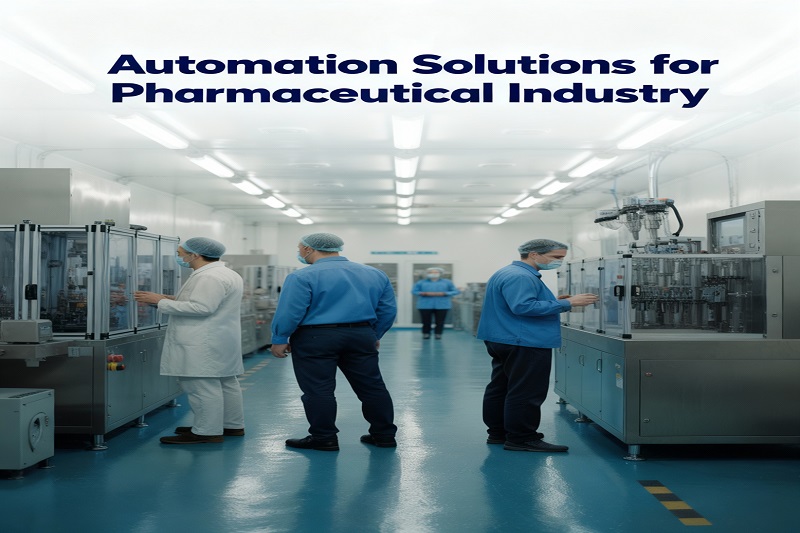
This is where automation solutions for the pharmaceutical industry are creating a massive impact.
Today, automation is not just an upgrade—it’s becoming a necessity for companies that want to stay ahead in efficiency, reliability, and regulatory compliance.
How Automation Solutions Are Transforming the Pharmaceutical Industry?
Automation in pharma refers to using advanced technologies—such as robotics, PLC systems, SCADA, IoT, and AI—to carry out repetitive tasks, manage data, monitor processes, and improve manufacturing accuracy.
It removes manual errors, improves batch consistency, and boosts overall productivity.
Why Pharmaceutical Companies Are Rapidly Adopting Automation
Here are the top reasons why automation is becoming mainstream in the pharma sector:
1. Higher Accuracy & Zero Human Error
Producing medicines requires extreme precision. Even a tiny variation can affect quality or compliance.
Automation ensures consistent results and eliminates manual mistakes.
2. Faster Production Cycles
Automated machines operate continuously, reducing downtime and speeding up manufacturing. This helps pharma companies meet market demand faster.
3. GMP & Regulatory Compliance
The pharmaceutical industry is heavily regulated.
Automation solutions maintain precise records, streamline audits, and ensure every process follows GMP, FDA, and WHO guidelines.
4. Enhanced Product Safety
Automation ensures secure and contamination-free production, maintaining the purity and safety of every batch.
5. Cost-Efficiency & Long-Term ROI
Once implemented, automation reduces labor costs, improves productivity, and provides an excellent return on investment over time.
Key Automation Solutions Used in the Pharmaceutical Industry
Below are the most popular and effective automation technologies transforming pharma manufacturing today:
PLC & SCADA Automation
- Real-time process monitoring
- Automated controls
- Better visibility of plant operations
- Reduced production downtime
Robotics in Pharma
Robots perform tasks like packaging, filling, labeling, and inspection with exceptional accuracy and speed.
IoT-Based Smart Manufacturing
IoT sensors help track temperature, humidity, contamination levels, and equipment performance in real time.
Machine Vision & Inspection Systems
Used for high-speed:
- Tablet inspection
- Packaging checks
- Label verification
Ensures zero-defect products.
Automated Material Handling Systems
Conveyor systems, gantry robots, and automated storage systems streamline logistics and reduce manual workload.
Benefits of Automation for the Pharmaceutical Industry
✔ Improved product quality
✔ Faster manufacturing cycles
✔ Accurate batch record maintenance
✔ Reduced human intervention
✔ Increased production capacity
✔ Better utilization of raw materials
✔ Enhanced workplace safety
Automation brings consistency, reliability, and full control over production processes—making it essential for modern pharma companies.
Conclusion
Automation solutions for the pharmaceutical industry are shaping the future of manufacturing. They help pharma companies achieve unmatched accuracy, safety, efficiency, and compliance.
Whether it's through robotics, PLC–SCADA systems, IoT, or machine vision, automation empowers pharmaceutical manufacturers to scale production while maintaining world-class quality standards.
If you want your pharma plant to perform better, reduce downtime, and maximize output—automation is the smartest investment you can make today.